
Image was created by ChatGPT
I asked ChatGPT to draw its imagined version of me at 9 years old, based on its impression from interacting with me.
This post is written in two parts: the first part is in Chinese, and the second part is in English.
Feel free to scroll down if you’d like to read it in English.
I am not a medical expert nor have any medical backgroud. This post only to share my thoughts. Please talk to you doctor for any medical issue and consultation.
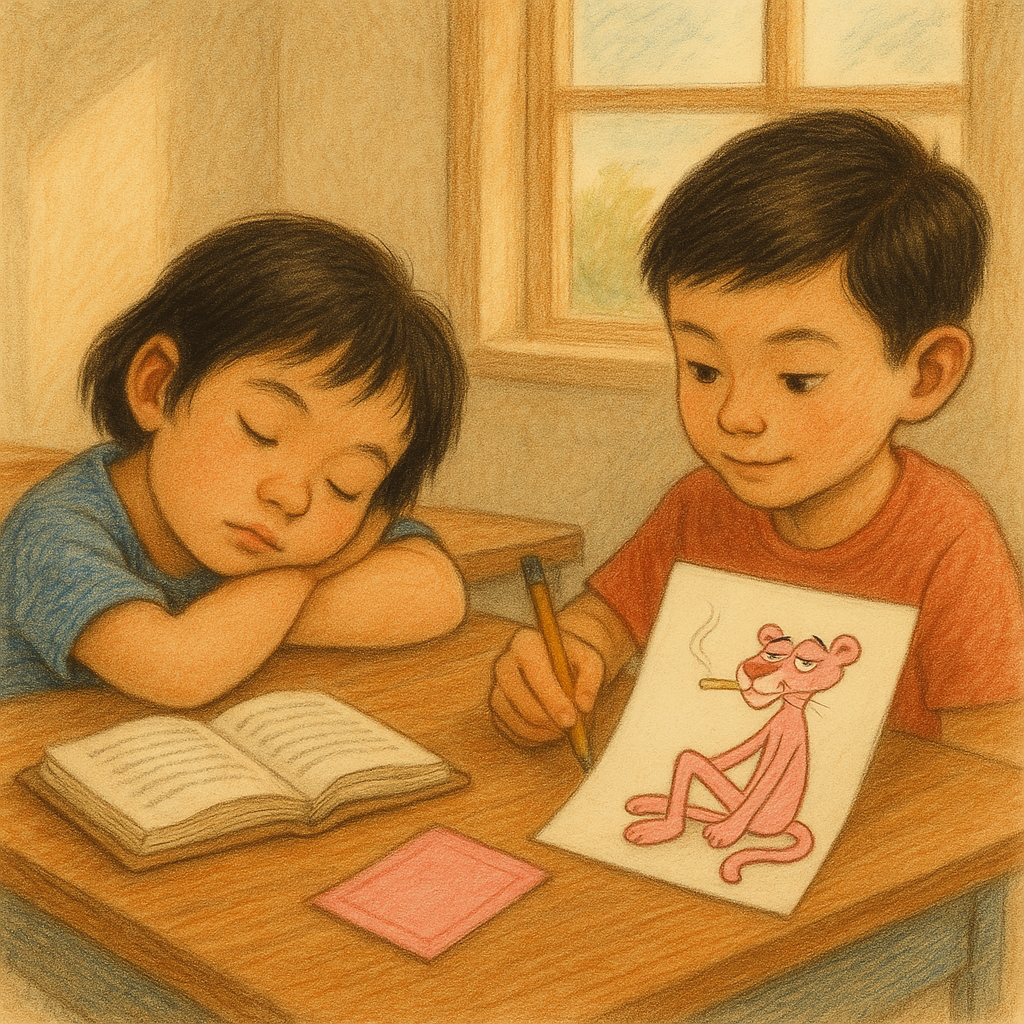
An old, old memory—probably from when I was in 4th or 5th grade. I was so sleepy during the teacher’s lecture, nodding off like I was fishing with my own head. The classmate sitting next to me noticed, and he drew a Pink Panther using his fountain pen, then handed it to me.
最近有個朋友傳了一個 YouTube 影片,介紹綠拿鐵的好處(應該也有示範如何製作),影片中的示範者聲稱自己因此「逆轉」糖尿病,朋友說介紹這部影片給他的那位朋友,也因此瘦了好幾磅。喝綠拿鐵真的可以逆轉糖尿病嗎?我的答案是:「它可以是一個幫助,但絕對不是全部。」
我不是反對綠拿鐵。它的確是一種富含蔬果營養的健康飲品,對血糖管理可能有正面幫助。但如果只是早上喝一杯綠拿鐵,卻在中午和晚上大吃韓式炸雞、泡麵、鹽酥雞和其他高油高鹽的零食,還有每天一杯奶茶——那麼這杯綠拿鐵根本救不了你。生活習慣不改,高血糖或糖尿病終究還是會找上門。
是的,目前台灣糖尿病患者已佔總人口的 10% 以上。根據衛生福利部國民健康署的統計,18 歲以上國人的糖尿病盛行率為 11.1%,約有 218 萬人罹患糖尿病。此外,根據最新的 2019~2023 年國民營養健康調查統計,20 歲以上成人的糖尿病盛行率為 12.8%,也就是每 10 位成人中就有 1 人患有糖尿病。(亞洲人以米飯麵為主恐怕其他國家也好不到那去 但 這不是比較問題)
這些數據顯示,台灣糖尿病的盛行率確實超過 10%,且有逐年上升的趨勢。糖尿病已是台灣十大死因之一,對公共健康造成重大影響。因此建議民眾定期健康檢查,特別是 40 歲以上者應每三年接受一次免費健檢,65 歲以上者則建議每年檢查一次,以早期發現血糖異常,降低糖尿病與其併發症的風險。不過我認為,不該只限於 40 歲以上的人。
看到這些數據,我雖然感到震驚,但並不意外。1997 年我離開台灣時,當時珍珠奶茶還沒有現在這麼盛行。雖然已經出現,但不像現在幾乎大街小巷都是奶茶店(雖然現在可以選擇糖度)。加上亞洲人飲食本就以澱粉為主,再搭配近年大流行的韓式炸雞文化,糖尿病盛行率超過 10%,說實話我覺得還是低估了。
我是初期糖尿病患者(HbA1c 6.6%),過去兩個多月以來,我完全不靠藥物,只靠嚴格控制飲食。讓我最驚訝的是,我原本左眼有視網膜破洞,右眼也準備要開刀,但自從開始控制血糖、進行低碳飲食後,右眼的破洞竟然自然癒合。我的眼科醫師沒有認為這與血糖有關,但我個人認為絕對有關係。[注意我也是花了很長的時間才走到這一步 看看綠色上面統計數字 多少年輕人早早的就是糖門子弟了 ]
這不是奇蹟,而是血糖穩定後身體自我修復能力的體現。如果我沒有改變飲食方式,視網膜的狀況只可能會繼續惡化。
有醫學研究指出,糖尿病對器官的影響往往最先出現在眼睛,其次是腎臟、神經系統、心血管。但多數人直到視力模糊、甚至視網膜剝離時才驚覺,原來自己早已「默默受損多年」。
所以,逆轉糖尿病的重點其實是生活習慣,而不是單一飲品或保健品。
「逆轉」在醫學上接近英文的 remission(緩解),意指病情受到良好控制,但仍需持續維護,絕對不是從此跟高血糖說再見 沒有的事!!!!
目前控制血糖最有效的方法,依然是穩定飲食與適度運動。
我是在 2025 年 2 月 12 日開始使用 CGM(持續血糖監測器),而就在一年前,我的 HbA1c 是 5.9%。當時我請醫師開 CGM,他不肯,因為他認為我還沒有糖尿病, 終於我用了一年努力吃麵包澱粉 “終於”把自己吃到6.6 一開始,醫生 還不肯開 因為她認為我只是是初期糖尿病,保險公司不會給付這種設備(通常只給重症患者使用)。
我跟醫師說:第一,如果保險公司不給付,我願意自費,但我需要處方籤。第二,不能等我進入嚴重糖尿病狀態才開始監測血糖。
最後醫師才開立處方。
目前我使用的是亞培最基本的 Freestyle Libre 14 天裝,這顆是我手上最後一顆(一次配 3 個月,共六顆)。新出的 Libre 3 Plus 是每顆可以用 15 天。
CGM 數據不一定百分百準確,建議搭配指尖血糖測量作為交叉比對。尤其當你吃了一些你認為血糖會上升,卻發現 CGM 數據非常漂亮,那就要小心了。要戳手指頭來確認, CGM 有 15 分鐘延遲,指尖血糖才是即時且最準確的測量方式(當然也要買到準確的品牌)。
我預計五月初回診,屆時會再觀察進展。CGM 數據通常會比實際 HbA1c 漂亮一些,所以我已經有心理準備:實際數據可能稍高。
談回飲食,我以前是個徹底的碳水魔人,超愛吃米飯和麵。但在開始使用CGM第一天晚上,我吃下一大碗白飯後(跟精緻碳水說再見????這甚麼心態?),血糖從飯前 96 飆到近 200,那一晚血糖花了超過三小時才回到接近正常值,從此我對精緻澱粉完全沒興趣(倒胃口)。
目前我採取低碳飲食,不是完全不吃澱粉。完全不吃是不行的,身體還是要維持一定處理澱粉的能力,否則當你突然攝取時,胰島素反應會過於劇烈。
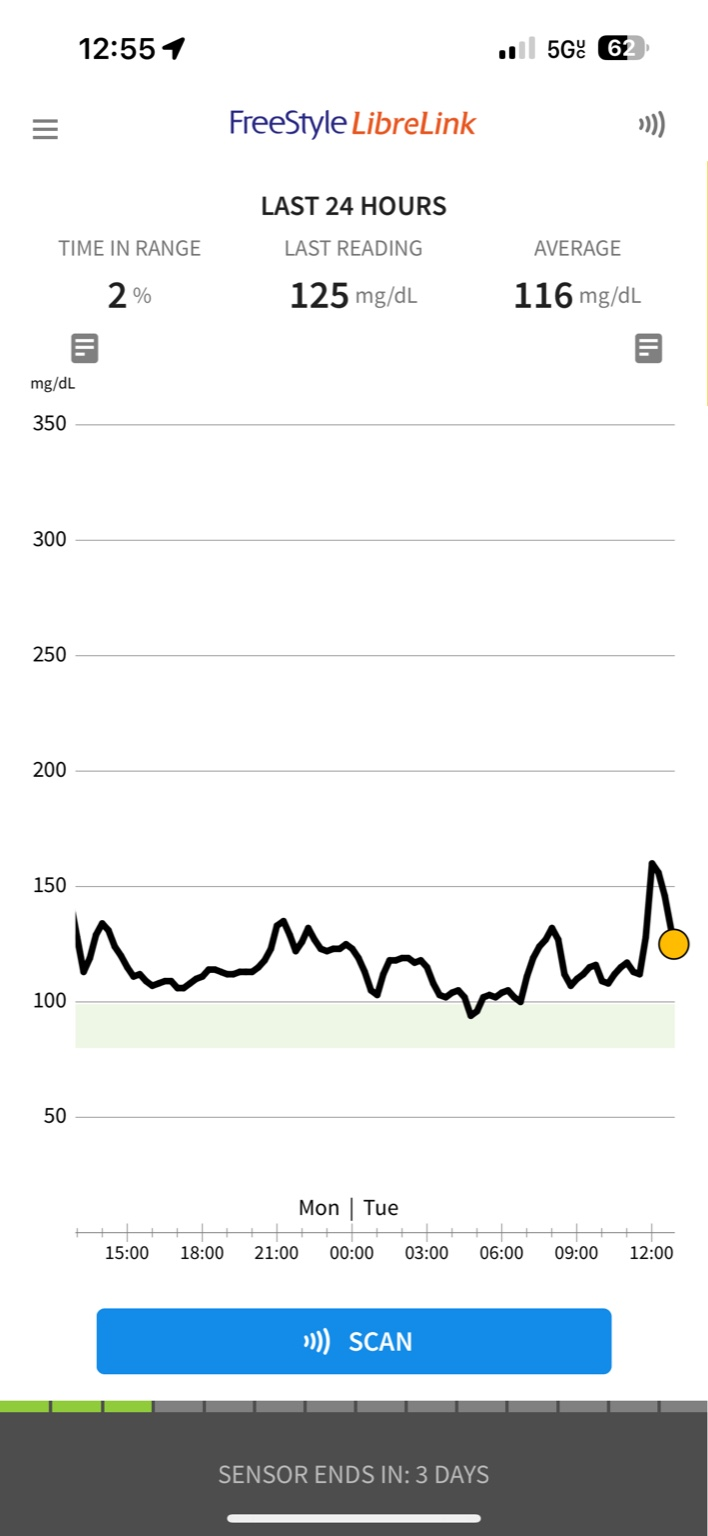
運動方面我不算勤快,但有進步。比如有時忍不住吃了一盒黑莓,看到血糖飆升,我就會去踩走步機,不到十分鐘血糖就壓下來了。運動真的很有效。
例如今天中午,我先吃了幾片牛肉後,忍不住把一整盒黑莓吃掉,然後外出辦事,血糖一度飆到 176,但因為在外面有走動,血糖很快就降下來了。這證明了運動的價值。(看下面寫唐圖)
高血糖的人最忌血糖長時間處於高峰。如果只是短暫升高後馬上下來,其實代表胰島素功能尚可。
一般人空腹血糖大約 80–100,我是初期糖尿病,AI 建議我設定在 120 或 125 內為「正常範圍」。但我兩個多月以來習慣了把目標設在 80–100,所以現在我設定的 CGM 範圍是 80–115(AI 說這樣設有點嚴苛,可能會有壓力,但我已經習慣了)。
我最常看到的血糖是 110 以下(CGM 數據),但我用 120 當作真實血糖預估。這樣等五月回診時,比較不會失望。
回到綠拿鐵:真的不能只靠綠拿鐵。要改變的,是整個生活習慣。
CGM 給了我震撼教育,讓我完全對精緻澱粉,甚至連粗澱粉也沒什麼興趣。 這不是「不能吃 要忍住」而是「沒興趣吃」。因為 CGM 即時給出食物的真相。例如,有些可能是科技與很活的滷牛筋明明牛筋沒有碳水除了滷汁(但不會因此讓你的血糖飆到17x),但血糖反應卻超級驚人;又比如草莓雖然 GI 值低,但空腹吃反而會飆高,還有滷味(無碳水滷味)雖滷汁含糖,但適量吃是可以接受的。
最大收穫是:我真的對澱粉和炸物都沒興趣了。

This is me at age of 5 based on its impression of ChatGPT.
In Taiwan, many people are promoting “green lattes” as a way to revert diabetes or high blood sugar. But I want to say—no, no, no—because you simply cannot reverse such conditions just by drinking a green latte every morning without changing your eating habits at the very least.
This so-called green latte is typically a blended drink made with vegetables and fruits—apple is commonly used—and sometimes includes grains or sesame. A friend recently sent me a YouTube link, shared by their friend, in which someone enthusiastically shared how the green latte helped “reverse” their diabetes. That person also claimed to have lost several pounds.
I didn’t click on the link. I told my friend: that kind of routine isn’t enough for me. What I need is a complete lifestyle change. A daily glass of green latte alone is definitely not going to rescue me from the sugar hell.
What really shocked me was a recent statistic: over 10% of people in Taiwan have diabetes. According to Taiwan’s Health Promotion Administration, the prevalence rate of diabetes among people aged 18 and over is 11.1%, affecting approximately 2.18 million people. In addition, the most recent National Nutrition and Health Survey (2019–2023) shows that among adults aged 20 and over, the diabetes prevalence rate is 12.8%—which means roughly 1 in every 10 adults in Taiwan has diabetes. That’s just crazy!
But honestly, I’m not entirely surprised. I remember the year I came to the U.S.—back then, there weren’t that many tea shops around, and it wasn’t that easy to find a place that sold boba milk tea. But at some point, everything changed. Now, tea shops are everywhere—you can literally find one on every corner, sometimes two or three on the same street or block.
And let’s be clear: these “tea shops” aren’t serving traditional tea. They’re blending tea with “milk” or shaking it with “milk powder”, loading it with sugar (even though you can technically choose your sugar level), and flavoring it with all kinds of “natural” smells—though frankly, I suspect a lot of that is just clever food tech making things smell and taste better than they actually are.
That kind of environment probably plays a major role in the rising diabetes rate.
So, when you see a green latte—yes, it’s a good thing. But you have to change your lifestyle completely and maintain that lifestyle forever. Once you begin having concerns about high blood sugar (even before an official diabetes diagnosis), it means your insulin function is already weakening or impaired.
You might be able to reverse your glucose levels through diet and lifestyle, but you can almost never fully reverse impaired insulin function.
And no, I’m not selling CGMs (continuous glucose monitors)—but using one truly helped me, even saved me, from sugar hell.
I’m not a fan of Asian-style “milk tea” at all. In my house, I don’t even keep any soft drinks—just coffee and loose tea leaves. I don’t use coffee creamer, or even milk. Soft drink is only for guests and after that all soft drinks would be taken to my office……….haha
But as an Asian, I grew up deeply immersed in carbs and fried foods. Eventually, that caught up with me. In February 2025, my HbA1c reached 6.6%, which pushed me into early-stage diabetes.
Just a year earlier, in 2024, my HbA1c was still at 5.9%.
It took me only one year—of eating too many carbs and living an unhealthy lifestyle, including poor eating habits—to push myself into this condition.
I started using a CGM (continuous glucose monitor). The first one I tried was the FreeStyle Libre 14-day, the most basic model. I don’t rely on it entirely—I also got two finger-prick meters to compare the results. The finger-prick method is definitely more accurate… but honestly, I don’t enjoy the poking!
In February 2025, my doctor didn’t prescribe any medication. Instead, he encouraged me to change my lifestyle. He asked me to come back for a follow-up in three months—in May.
At first, he was hesitant to prescribe the CGM, thinking I was still in the very early stages of diabetes and that the insurance company probably wouldn’t approve it—since CGMs are typically reserved for patients with more advanced or severe diabetes. But I told him:
“If insurance doesn’t cover it, I’m willing to pay out of pocket.
And why wait until my condition gets worse before doing something about it?”
Yes, I’m fully prepared to argue with the insurance company if they refuse to cover it.
There are other types of diabetes medication out there, but I don’t want to go that route. A friend of mine lost a lot of weight while taking one of those meds—but still, I refuse to use it.
I want to take control of my life—not let a medication take control of it for me.



 American-Born Cats!